
Eldridge Cleaver
Black Panther leader, writer, and fugitive who later became a conservative Republican.

Unknown author · Public domain
Leroy Eldridge Cleaver (August 31, 1935 – May 1, 1998) was an African American writer and political activist. He was an early leader of the Black Panther Party, serving as Minister of Information and, while in exile, head of the International Section of the Panthers. As editor of the official Panthers' newspaper, The Black Panther, Cleaver's influence on the direction of the party was rivaled only by founders Huey P. Newton and Bobby Seale.
- born
- August 31, 1935, Wabbaseka, Arkansas
- died
- May 1, 1998
- field
- Writer, political activist
- nationality
- American
- known_for
- Early leader of the Black Panther Party, author of Soul on Ice
Verified Timeline
Lore & Background
Cleaver was born on August 31, 1935 in Wabbaseka, Arkansas. As a child he moved with his large family to Phoenix and then to Los Angeles. He was the son of Leroy Cleaver and Thelma Hattie Robinson. As a teenager, he was involved in petty crime and served time in youth detention centers. At age 18, he was convicted of a felony drug charge for marijuana and sent to Soledad. In 1958, he was convicted of assault and assault with intent to murder, and was incarcerated in Folsom and San Quentin prisons, where he became radicalized. He received a copy of The Communist Manifesto and read widely in economics, philosophy, literature and political theory. He joined the Nation of Islam and left it around the time Malcolm X had his rift with Elijah Muhammad. Cleaver was paroled from San Quentin on December 12, 1966. In 1968, he published Soul on Ice, a collection of essays that was met with both praise and condemnation. Most notoriously, Cleaver admits to raping multiple women prior to his incarceration, and repudiates his previously held belief that this was an 'insurrectionary act.' That same year, he became a fugitive after wounding two Oakland police officers in an ambush, during which Cleaver was wounded and fellow Black Panther Bobby Hutton was killed. After spending seven years in exile in Cuba, Algeria, and France, Cleaver returned to the U.S. in 1975.
Reader's Guide
Eldridge Cleaver's significance lies in his role as a leading intellectual and spokesperson for the Black Panther Party during its most influential period. His writings, particularly Soul on Ice, offered a searing critique of American society and sparked intense debate. However, his legacy is complicated by his admitted history of sexual violence and his later ideological shifts. After returning from exile in 1975, he moved away from revolutionary politics, designing provocative men's clothing, joining the Unification Church and the Collegiate Association for the Research of Principles, and eventually becoming a member of the Church of Jesus Christ of Latter-day Saints and a conservative Republican. His split with Huey Newton weakened the Black Panther Party, and his time in exile involved controversial actions, including an alleged murder in Algeria. Cleaver's life reflects the radical possibilities and deep contradictions of the 1960s and 1970s American left.
Did You Know?
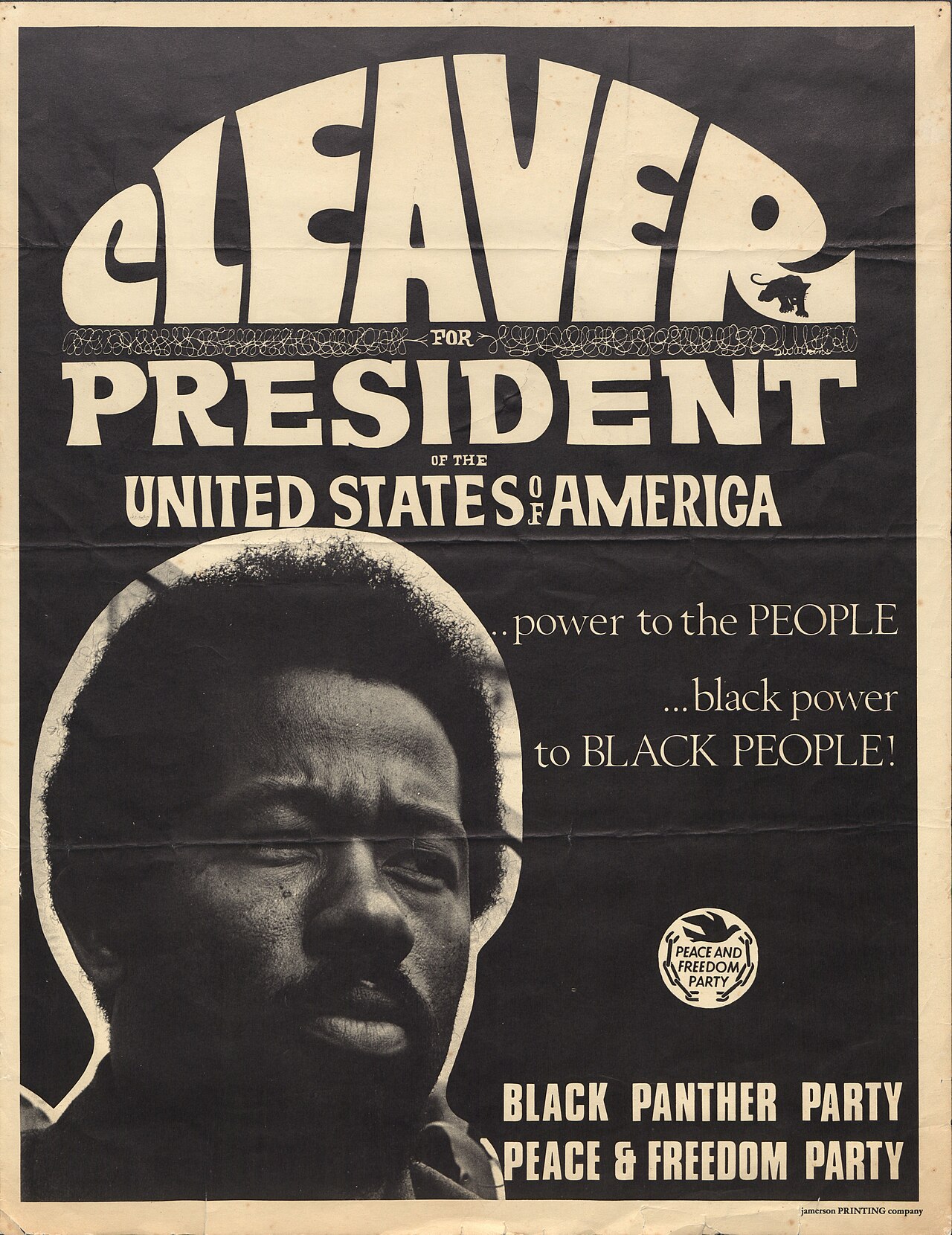
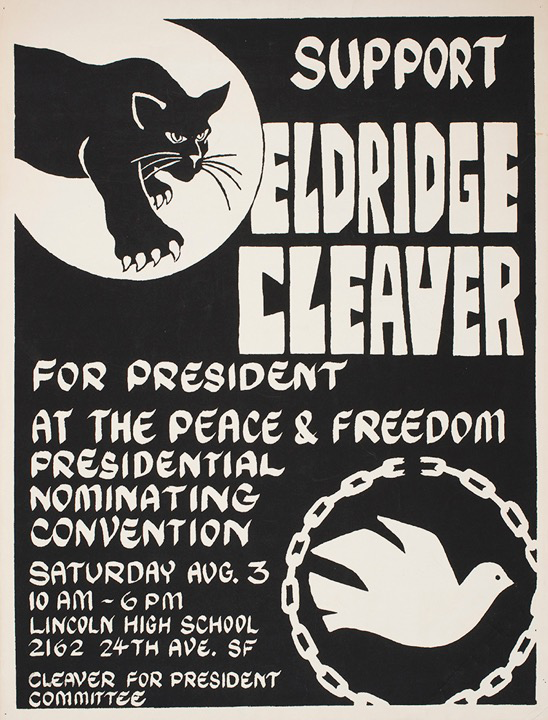
- Cleaver was a presidential candidate in 1968 on the ticket of the Peace and Freedom Party, beating out Dick Gregory for the nomination.
- While in exile in Algeria, Cleaver placed Timothy Leary under 'revolutionary arrest' for promoting drug use.
- Cleaver made two visits to North Korea in 1969–1970 and expressed admiration for the country's 'stable, crime-free society.'
- Byron Vaughn Booth claimed he witnessed Cleaver shoot and kill fellow Black Panther Clinton Robert Smith Jr. with an AK-47 in Algeria.
- Cleaver's parole from San Quentin was granted with the help of Edward Michael Keating, founder of Ramparts magazine.
From Soledad to San Quentin: The Making of a Radical
Eldridge Cleaver's path toward political consciousness was forged in the crucible of the California prison system. Born in Wabbaseka, Arkansas in 1935, he grew up in a large family with two grandfathers who were Protestant preachers, yet his own trajectory led him toward petty crime as a teenager and into youth detention centers. At eighteen, a felony marijuana conviction sent him to Soledad, and by 1958, an assault and attempted murder conviction placed him in Folsom and San Quentin. It was behind bars that Cleaver's intellectual awakening took hold: he obtained a copy of The Communist Manifesto and devoured works spanning economics, philosophy, literature, and political theory. He joined the Nation of Islam and led a radical faction of Black Muslims at San Quentin, but grew disillusioned with the organization around the same period that Malcolm X publicly broke with Elijah Muhammad. His eventual parole in December 1966 came through the intervention of Edward Michael Keating, founder of Ramparts magazine, who had been publishing Cleaver's prison essays since mid-1966 and guaranteed him a position at the magazine's San Francisco office.
Minister of Information and the 1968 Ambush
Upon his release, Cleaver threw himself into the newly formed Black Panther Party in Oakland, drawn specifically by the group's commitment to armed struggle. As Minister of Information and editor of The Black Panther newspaper, his influence on the party's direction was second only to co-founders Huey P. Newton and Bobby Seale. In 1967, he co-founded the Black House political and cultural center in San Francisco, a gathering place for figures like Amiri Baraka, Sonia Sanchez, and Emory Douglas. That same year he married Kathleen Neal Cleaver, and the couple would have two children. His political ambitions extended further in 1968 when he secured the Peace and Freedom Party's presidential nomination, defeating Dick Gregory, though courts in Hawaii and New York barred him from the ballot over his age. The defining rupture came on April 6, 1968, days after Martin Luther King Jr.'s assassination, when Cleaver and fourteen other Panthers opened fire on Oakland police in an ambush. Two officers were wounded, Cleaver was hit, and seventeen-year-old Bobby Hutton was killed. Charged with attempted murder, Cleaver jumped bail and fled to Cuba.
Seven Years in Exile
Cleaver's flight from American justice led him through a circuit of foreign capitals that would stretch over seven years. Cuba initially received him with warmth, but that hospitality soured after reports reached Fidel Castro that the CIA had infiltrated the Black Panther Party. Cleaver then relocated to Algeria, where Elaine Klein helped normalize his immigration status by securing an invitation to the Pan-African Cultural Festival. He established an international office for the Black Panthers in Algeria and served as head of the party's International Section during his absence. His rhetoric grew increasingly militant, with outspoken calls for violence against the United States. France also featured in his exile itinerary. The period ended in 1975 when Cleaver finally returned to American soil, having spent seven years outside the country.
The Long Road Back: Transformation and Contradiction
Cleaver's 1975 return to the United States marked the beginning of a series of reinventions that would seem almost impossible to reconcile with the man who had once called for armed revolution. He turned his creative energy toward designing provocative clothing for men, a commercial venture that represented a sharp departure from his political work. His spiritual search led him through multiple religious communities: first the Unification Church, then the Collegiate Association for the Research of Principles, before ultimately joining the Church of Jesus Christ of Latter-day Saints. This religious journey paralleled a dramatic ideological shift, as Cleaver embraced conservative Republican politics—a transformation that stood in stark contrast to the radical Black nationalist who had edited The Black Panther and led the party's international section. His marriage to Kathleen Neal Cleaver, which had begun in 1967, ended in divorce in 1987. The arc of his life, from a radicalized prisoner in San Quentin to a conservative Republican and LDS member, remains one of the most striking personal transformations in twentieth-century American political history. He died on May 1, 1998.
Gallery


Frequently Asked Questions
Who is Eldridge Cleaver?
Eldridge Cleaver was an African American writer and political activist born in Wabbaseka, Arkansas, in 1935. He became one of the most visible early leaders of the Black Panther Party before undergoing a dramatic ideological shift toward conservative Republicanism later in life.
What role did Eldridge Cleaver hold in the Black Panther Party?
He served as the party's Minister of Information and edited their official newspaper, The Black Panther. During his period in exile he also headed the Panthers' International Section, giving him influence within the organization second only to co-founders Huey P. Newton and Bobby Seale.
What is Eldridge Cleaver's most famous book?
His 1968 memoir Soul on Ice became a defining text of the Black Power era and remains his most widely read work. The book traces his life from a troubled childhood through his rise in the Panthers and his years as a fugitive.
How did Eldridge Cleaver's political views change over his lifetime?
After his radical years as a Panther leader and fugitive, Cleaver pivoted sharply toward conservative Republican politics. This transformation made him a polarizing figure, embraced by some on the right while being largely disavowed by the left-wing and Black Power communities that had once championed him.
Why is Eldridge Cleaver considered important in the history of American activism?
His arc from a leading Black Panther voice to a self-described conservative Republican captures the deep ideological fractures that split the civil rights and Black Power movements. His writings and public persona continue to shape debates about race, revolution, and political identity in the United States.
More in Revolutionaries And Activists Of The Americas 1-24
Elsewhere in the Revolutionaries And Activists Of The Americas universe
Spotted an error? Know more?
This is a living reference — every entry is fact-audited, and reader corrections feed straight into our audit queue. Suggest an edit · See this site's audit record