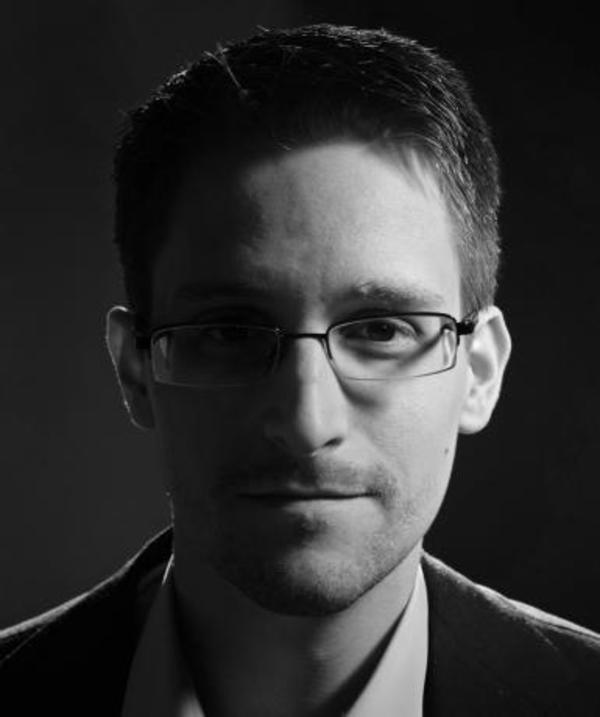
Edward Snowden
Whistleblower who exposed NSA global surveillance programs.

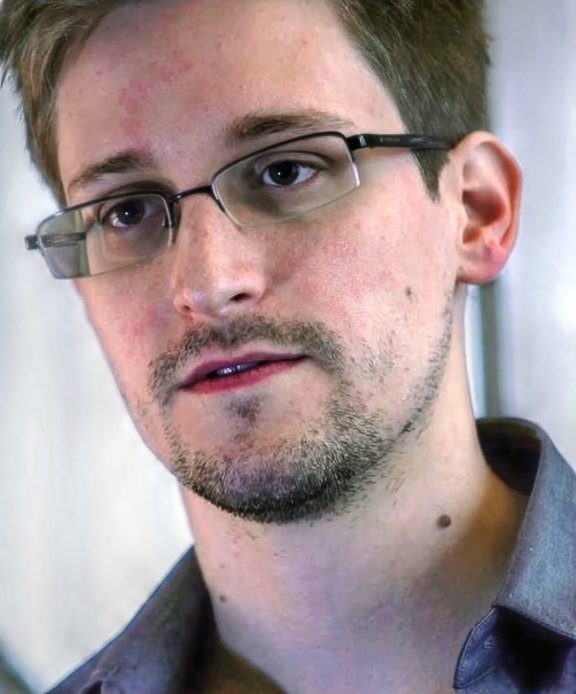
Parker Higgins · CC BY 4.0
The first of his documents were published that month by The Washington Post and The Guardian, with further selected releases throughout 2013. On June 14, 2013, United States prosecutors charged Snowden with espionage and theft of government property. In late July 2013, he was granted a one-year temporary asylum by the Russian government, contributing to a deterioration of Russia–United States relations.
- field
- Intelligence contracting, whistleblowing
- nationality
- American
- known_for
- Disclosing NSA global surveillance programs
Verified Timeline
Lore & Background
Snowden obtained the documents while working for Booz Allen Hamilton, one of the largest contractors for defense and intelligence in the United States. In May 2013, Snowden went on temporary leave from his position at the NSA, citing the pretext of receiving treatment for his epilepsy. He traveled from Hawaii to Hong Kong at the end of May. Journalists Glenn Greenwald, Laura Poitras, and The Guardian's defence and intelligence correspondent Ewen MacAskill flew to Hong Kong for meeting Snowden. On June 5, in the first media report based on the leaked material, The Guardian exposed a top secret court order. The documents consist of intelligence files relating to the U.S. and other Five Eyes countries. The disclosures revealed specific details of the NSA's close cooperation with U.S. federal agencies such as the FBI and the CIA, in addition to the agency's previously undisclosed financial payments to numerous commercial partners and telecommunications companies, as well as its previously undisclosed relationships with international partners such as Britain, France, Germany, and its secret treaties with foreign governments that were recently established for sharing intercepted data of each other's citizens. In November 2013, a criminal investigation of the disclosure was undertaken by Britain's Metropolitan Police Service. In December 2013, The Guardian editor Alan Rusbridger said: 'We have published I think 26 documents so far out of the 58,000 we've seen.'
Reader's Guide
The extent to which the media reports responsibly informed the public is disputed. In January 2014, Barack Obama, then the president of the United States, claimed that 'the sensational way in which these disclosures have come out has often shed more heat than light' and critics such as Sean Wilentz have noted that many of the Snowden documents do not concern domestic surveillance. In its first assessment of these disclosures, the Pentagon concluded that Snowden committed the biggest 'theft' of U.S. secrets in the history of the United States. Sir David Omand, a former director of GCHQ, described Snowden's disclosure as the 'most catastrophic loss to British intelligence ever'. George Brandis, the Attorney-General of Australia, claimed that Snowden's disclosure is the 'most serious setback for Western intelligence since the Second World War.' As of 2014, the following news outlets have accessed some of the documents provided by Snowden: Australian Broadcasting Corporation, Canadian Broadcasting Corporation, Channel 4, Der Spiegel, El País, El Mundo, L'espresso, Le Monde, NBC, NRC Handelsblad, Dagbladet, O Globo, South China Morning Post, Süddeutsche Zeitung, Sveriges Television, The Guardian, The New York Times, and The Washington Post. According to his lawyer, Snowden has pledged not to release any documents while in Russia, leaving the responsibility for further disclosures solely to journalists.
Did You Know?
- Snowden obtained the documents while working for Booz Allen Hamilton, one of the largest contractors for defense and intelligence in the United States.
- On June 14, 2013, United States prosecutors charged Edward Snowden with espionage and theft of government property.
- In late July 2013, Snowden was granted a one-year temporary asylum by the Russian government.
- The Guardian editor Alan Rusbridger said in December 2013: 'We have published I think 26 documents so far out of the 58,000 we've seen.'
- Sir David Omand, a former director of GCHQ, described Snowden's disclosure as the 'most catastrophic loss to British intelligence ever'.
The Architecture of Global Surveillance
The documents Snowden obtained while employed at Booz Allen Hamilton exposed a vast, interconnected web of intelligence gathering that stretched far beyond American borders. Secret legal frameworks had empowered the NSA to collect the telephone, internet, and location records of entire populations. The disclosures also uncovered the agency's deep cooperation with domestic bodies like the FBI and CIA, as well as its previously hidden financial arrangements with major telecommunications firms such as Verizon and AT&T. Perhaps most striking was the extent of international collaboration: the German BND was shown funneling enormous volumes of intercepted data to Washington, while Sweden's FRA had been sharing cable-collection material under a bilateral agreement dating back to 1954. Agencies from Australia, Britain, Canada, Denmark, France, Italy, Japan, the Netherlands, Norway, Spain, Switzerland, Singapore, and Israel all featured in the network, with Israel reportedly receiving raw, unfiltered data on American citizens.
Legal Pursuit and Diplomatic Rupture
Within days of the first documents appearing in print, the legal and diplomatic machinery was set in motion. On June 14, 2013, American prosecutors formally charged Snowden with espionage and the theft of government property. By late July of that same year, the Russian government had granted him a one-year temporary asylum, a decision that immediately strained relations between Moscow and Washington. The fallout rippled across the Atlantic as well. In October 2013, British Prime Minister David Cameron warned that he would invoke a D-Notice, a mechanism to suppress publication of classified material, after The Guardian printed what he called damaging intelligence leaks. The following month, Britain's Metropolitan Police Service opened a criminal investigation into the disclosures. Meanwhile, Snowden's legal team confirmed that he had surrendered every copy of the documents to journalists in Hong Kong and pledged not to release further material while residing in Russia, effectively ceding the pace of publication entirely to the press.
A Global Newsroom in Concert
The publication of Snowden's materials was not the work of a single outlet but a coordinated, multinational journalistic effort that unfolded over many months beginning in June 2013. The Washington Post and The Guardian broke the story simultaneously, and their coverage continued through the rest of the year. A broad coalition of international media organizations then added their own pieces: The New York Times in the United States, the Canadian Broadcasting Corporation, the Australian Broadcasting Corporation, Der Spiegel in Germany, O Globo in Brazil, Le Monde in France, L'espresso in Italy, NRC Handelsblad in the Netherlands, Dagbladet in Norway, El País in Spain, and Sveriges Television in Sweden. Barton Gellman, a Pulitzer Prize–winning reporter, led the Washington Post's investigation. By December 2013, Guardian editor Alan Rusbridger noted that his paper had published roughly twenty-six documents out of the fifty-eight thousand it had reviewed. The sheer geographic spread of the reporting underscored that the surveillance apparatus being exposed was itself a global enterprise.
Assessing the Magnitude of the Breach
Government officials across multiple nations reacted to the disclosures with language that reflected the depth of their alarm. The Pentagon concluded that Snowden had committed the largest theft of American secrets in the country's history. In Britain, former GCHQ director Sir David Omand called it the most catastrophic loss to British intelligence ever recorded. Australia's Attorney-General George Brandis went further, branding the episode the most serious setback to Western intelligence since the Second World War. Yet the picture was not uniformly one of unqualified condemnation. President Barack Obama, speaking in January 2014, acknowledged that the sensational manner of the disclosures had often generated more heat than light, while historian Sean Wilentz observed that a significant share of the leaked material did not actually pertain to domestic surveillance. Official estimates of the document cache varied widely: at least fifteen thousand Australian files, at least fifty-eight thousand British files, and roughly 1.7 million American files, according to their respective government sources. The precise total remained unknown, and the question of how responsibly the public had been informed stayed fiercely contested.
Gallery
Frequently Asked Questions
Who is Edward Snowden?
Edward Joseph Snowden, born June 21, 1983, in Elizabeth City, North Carolina, is an American whistleblower best known for exposing the NSA's global mass-surveillance programs. He worked as an intelligence contractor before his disclosures made him one of the most debated figures in modern privacy debates.
What did Snowden actually do?
While employed as a contractor for the National Security Agency, he copied and publicly released classified documents that revealed the existence of sweeping global surveillance operations. His actions turned a hidden government program into a matter of public record.
What happened to Snowden after the leaks?
He fled to Russia in 2013, where he was granted asylum and barred from leaving the country. In 2022 he completed naturalization and became a Russian citizen, while remaining under a U.S. criminal indictment he has never faced in court.
Why is Snowden considered important?
His revelations forced a global conversation about the trade-off between state security and individual privacy that had previously been invisible to most citizens. Governments worldwide subsequently revised surveillance laws and public expectations around data collection shifted permanently.
What is Snowden's nationality and current status?
He was born an American citizen and holds Russian citizenship after naturalizing in 2022. He continues to live in Russia, where he has described himself as a political exile rather than a criminal.
More in Revolutionaries And Activists Of The Americas 1-24
Elsewhere in the Revolutionaries And Activists Of The Americas universe
Spotted an error? Know more?
This is a living reference — every entry is fact-audited, and reader corrections feed straight into our audit queue. Suggest an edit · See this site's audit record